Anti-Slip Flooring for Chemical & Process Environments — What to Look For
Chemical plants, pharmaceutical facilities and food processing sites all share a common flooring problem: standard anti-slip surfaces degrade faster under chemical exposure, frequent washdown or acidic contamination than they would in a typical factory setting.
Why standard anti-slip surfaces fail in these environments
Many anti-slip coatings are formulated for general durability rather than chemical resistance. Repeated exposure to solvents, acids, alkalis or aggressive cleaning regimes can break down the resin binder over time, leading to grit loss, surface degradation and a return of slip risk — often faster than the visible wear would suggest.
What to look for when specifying
- A chemical-resistant resin base (epoxy resin is a common choice) rather than a general-purpose coating.
- A grip aggregate bonded thoroughly enough to withstand pressure washing and chemical washdown without lifting.
- Compatibility with your specific chemical exposure — solvent resistance and acid resistance aren't the same thing, so it's worth being specific about what the floor will actually be exposed to.
Where this fits with Helion
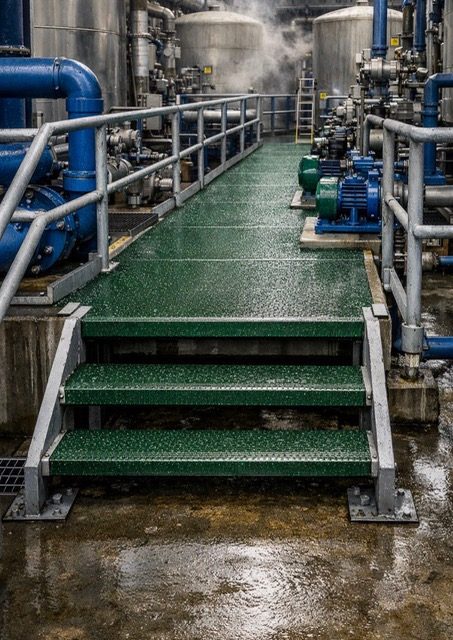
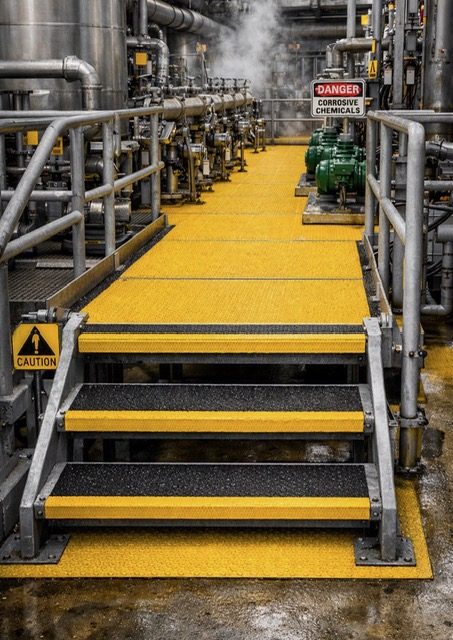
Helion ProChem is Corrotec's chemical-resistant anti-slip plate, built on a blast-cleaned steel or aluminium base with a chemical-resistant epoxy resin surface, manufactured to your site dimensions. It's designed for the process areas where a standard anti-slip floor plate would be expected to degrade faster than the environment allows.
Explore [Helion ProChem — chemical-resistant anti-slip flooring]